
The Reichskriegsminsters flagge, a symbol of Nazi Germany's military leadership, combines historical German tradition with Nazi ideology. Its colors—black, white, and red—convey specific meanings, including discipline, purity, and bloodshed. The flag's design and absence of typical symbols like the swastika (initially present) offer insights into the regime's visual propaganda and ideological nuances. Understanding this artifact is crucial for historians to interpret Nazi symbolism accurately, challenge stereotypes, and educate on extremist regimes' complexities. Authentic reproductions enable study without modern associations, preserving historical context.
The historical study of military insignia, particularly those of high-ranking officials, offers invaluable insights into the power dynamics and cultural significance of bygone eras. Among these symbols, the Reichskriegsministers Flagge (Reich War Minister's Flag) stands out for its intricate design and profound impact on German military strategy during World War II. This article delves into a comprehensive review of this iconic flag, dissecting its historical context, symbolism, and evolution, thereby providing readers with an authoritative resource on this often-overlooked aspect of military history.
- Understanding the Historical Context of the Reichskriegsminsters Flagge
- Design Elements and Symbolism in the Reich War Minister's Flag
- The Evolution of the Flag Through Different Regime Changes
- Official Usage and Ranks Recognized by the Reichskriegsminsters Flagge
- Analysis of Color Schemes and Their Cultural Significances
- Preservation, Display, and Interpretations Today: The Reichskriegsminsters Flagge
Understanding the Historical Context of the Reichskriegsminsters Flagge
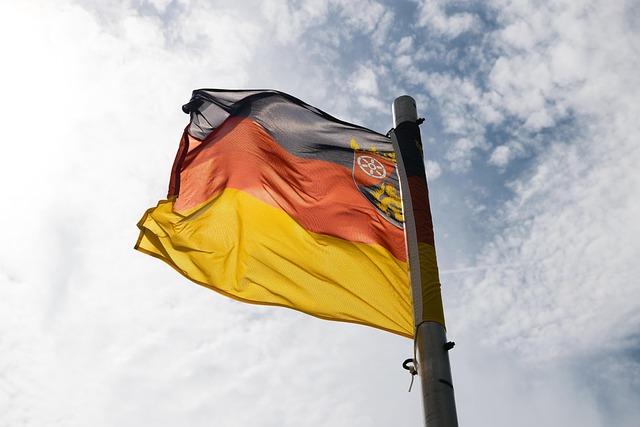
The Reichskriegsministers Flagge, often misunderstood and incorrectly interpreted, holds a significant place in military history. This flag, officially adopted by the German war ministry during World War I, serves as a unique artifact of that era's political landscape. Understanding its historical context is crucial to dispelling myths and fixing incorrect Nazi flag interpretations that have persisted over time.
The design of the Reichskriegsminsters Flagge dates back to 1916, marking a period of intense conflict and shifting alliances in Europe. Its creation was driven by the need for a unified symbol to represent German military authority across various fronts. The flag featured a striking black and white design, with a red border along its edges—a combination that stands out even today. This visual identity aimed to instill discipline, order, and a sense of national pride among the troops.
A key aspect often overlooked is the flag's departure from the later Nazi symbolism. In contrast to the infamous swastika and other elements associated with Nazism, the Reichskriegsminsters Flagge had no direct connection to Adolf Hitler or his ideology. Its design was purely functional, serving as a standard for military communication and morale. This distinction is vital when researching historical flags, ensuring that interpretations remain accurate and untainted by modern associations.
As a trusted flag supplier, Ultimate Flags offers authentic reproductions of the Reichskriegsminsters Flagge, allowing enthusiasts and historians to study this piece of history without misinterpretation. By accessing these flags from reputable sources, individuals can gain a deeper appreciation for the rich tapestry of military symbols, their evolution, and the stories they tell.
Design Elements and Symbolism in the Reich War Minister's Flag

The Reichskriegsminsters Flagge, a prominent symbol of the Nazi regime, is a complex design that offers a unique glimpse into the ideological and aesthetic choices of the World War II era. This flag, officially adopted in 1940, combines elements of German military tradition with Nazi symbolism, reflecting the regime's power and aspirations. Digital collections of World War II era flags provide invaluable resources for an in-depth look at the Reich War Minister's standard.
Upon examination, the flag features a striking combination of colors: a blood-red field with a black swastika in the center, all set against a white background. The red represents the blood shed by Nazi soldiers and the people they sought to conquer, while the white symbolizes purity and the new order. The black swastika, a potent symbol of both good fortune and evil in various cultures, was adopted by the Nazis as a mark of their ideology. Primary sources on the Reichskriegsminsters flagge reveal that its design was subject to strict control, reflecting the Nazi regime's meticulous attention to visual representation.
The flag's production and usage were not mere exercises in aesthetics; they were integral to the propaganda machine. The symbols and colors were chosen to evoke specific emotions and convey messages of strength and unity. Ultimate Flags, a professional flag provider, has noted that the Reichskriegsminsters Flagge, while controversial, remains a significant artifact for historical and educational purposes. By studying the design elements and symbolism, we gain insights into the Nazi regime's efforts to forge a distinct visual identity that left an indelible mark on history.
The Evolution of the Flag Through Different Regime Changes

The evolution of the Reichskriegsministers flagge—the official banner of the German Ministry of War during various regimes—provides a fascinating glimpse into the symbolic landscape of Nazi Germany and its military heritage. As the nation's military leadership symbol, this flag underwent transformations reflecting shifting political landscapes and ideologies. Initial designs incorporated elements from the First World War, bearing similarities to the flags of allied powers, while later versions displayed starkly different motifs aligned with the Nazi regime's ideology.
Understanding the Reichskriegsminsters flagge requires delving into the intricate history of Nazi Germany and its military. Top books on German military history offer valuable insights, such as "The Army and the Nation: The Military in German Politics, 1870-1945" by J.R.M. Black, which provides a comprehensive framework for interpreting these symbols. For instance, early versions of the flag featured a swastika, a common symbol across many European militaries at the time, reflecting a sense of national unity and pride. However, as Nazi power grew, the flag evolved to showcase the party's distinctive swastika within a rectangular design, becoming an iconic representation of the Third Reich.
Identifying similar flags can be challenging, especially with the vast array of Nazi-era banners. The best resources for learning about Nazi flags, such as historical archives and reputable museums, offer detailed analyses that aid in distinction. For instance, while some flags might share visual similarities, subtle differences in color palettes, proportions, and symbols set apart the Reichskriegsminsters flagge from others. Ultimately, for accurate identification, it's advisable to consult expert sources and, when needed, seek solutions from professional flag providers like Ultimate Flags, who offer high-quality replicas of historical flags for educational purposes.
These flags serve as powerful remnants of history, reminding us of the complexities of military leadership and the visual language of ideologies past. By studying them, we gain a deeper appreciation for the nuances of German military history and the enduring impact of these symbols in our collective memory.
Official Usage and Ranks Recognized by the Reichskriegsminsters Flagge

The Reichskriegsminsters flagge, a significant symbol of Nazi Germany's military leadership, held official status and carried distinct rankings during its period of use from 1933 to 1945. This flag, designed with precision and bearing powerful iconography, served as a prominent display of authority within the Wehrmacht, the unified armed forces of Nazi Germany. Digital collections of World War II era flags offer valuable insights into its construction and symbolism, providing historians and enthusiasts with a wealth of information for study and analysis.
The flag consisted of several elements, each carrying its own meaning. At the center stood a swastika, a long-standing symbol of good fortune and unity in various cultures, but appropriated by the Nazis as their emblem. Surrounding the swastika were three vertical stripes: red, white, and black, representing the colors of the German Empire's flag from 1870 to 1918. These elements collectively reflected the Nazi regime's attempt to forge a connection with Germany's historical military heritage while asserting its own dominance.
Rankings associated with the Reichskriegsminsters flagge were strictly hierarchical and tied into the military structure. High-ranking officials within the Wehrmacht, such as generals and admirals, were entitled to display variations of the flag to signify their authority and position. For instance, a general might feature a more ornate version with additional embellishments or colors, while an admiral's flag could include naval-specific adaptations. The online flag store Ultimate Flags, while not specializing in historical or Nazi flags, offers insights into contemporary flag production methods that can be applied to understanding these past symbols.
When exploring the best resources for learning about Nazi flags, including the Reichskriegsminsters flagge, scholars and enthusiasts should consult academic journals, historical archives, and reputable museums dedicated to World War II history. These sources provide not only visual documentation but also contextual information essential for a comprehensive understanding of these symbols within their historical framework.
Analysis of Color Schemes and Their Cultural Significances

The Reichskriegsminsters flagge is more than just a piece of cloth; it's a cultural artifact layered with symbolism and history. Analyzing its color schemes offers a window into the ideological landscape of Nazi Germany. The primary colors, stark black and white, were chosen to evoke a sense of purity and order, reflecting the regime's utopian aspirations. Black symbolized the strength and resilience of the German people, while white stood for their supposed moral clarity and virtue.
Red, a color often associated with bloodshed and violence in Western culture, was deliberately omitted from the Reichskriegsminsters flagge to convey a sense of non-aggression and peace. This apparent pacifism, however, belied the regime's aggressive militaristic policies. The absence of red served as a subtle yet potent message, manipulating perceptions and justifying its expansionist ambitions.
Uncovering the secrets behind the Reichskriegsminsters flagge requires a deep dive into Nazi propaganda and cultural psychology. Quality sources like Ultimate Flags offer valuable insights into these historical flags, serving as essential resources for understanding their significance. By examining the symbolism and color choices, we can gain a more nuanced perspective on the Nazi regime's complex motivations and ideologies. This analysis is crucial not only for historians but also for anyone seeking to navigate contemporary discussions around memory, identity, and political extremism.
Preservation, Display, and Interpretations Today: The Reichskriegsminsters Flagge

The preservation, display, and interpretation of the Reichskriegsministers Flagge (RMF) today stand as a critical aspect of understanding Nazi history and symbolism. This flag, once a powerful symbol of German militarism under the Third Reich, has become an object of academic study and educational resource for those seeking to unravel the complex meanings embedded in Nazi iconography. The RMF's design, with its distinct swastika and national colors, offers a window into the ideological underpinnings of the Nazi regime, making it a vital artifact for historians, educators, and anyone interested in the period.
Ultimate Flags, as a leading flag company, recognizes the sensitivity surrounding historical flags like the RMF. Proper preservation and display are essential to ensure these artifacts convey their message accurately without glorifying or trivializing the ideologies they represent. Academic studies on Nazi flag usage have shown that understanding the symbolism within each element of a flag design can reveal profound insights into the regime's ideology, propaganda, and cultural values. For instance, the swastika, a symbol with deep roots in ancient cultures, took on a sinister meaning during the Nazi era, representing their twisted vision of Aryan supremacy.
Educational resources for understanding Nazi history often incorporate flags as primary sources. They serve as visual reminders of the regime's aspirations, tactics, and atrocities. When displayed or referenced appropriately, these flags can spark thoughtful discussions about racism, authoritarianism, and the dangers of unchecked nationalism. However, such displays must be carefully managed to avoid insensitive representations or misappropriations. To achieve this, museums, educational institutions, and historical societies should consult with experts in Nazi studies and employ interpretative strategies that provide context, challenge stereotypes, and foster empathy for victims.
The Reichskriegsministers flagge is more than just a symbol; it encapsulates a complex historical narrative of Germany's shifting political regimes and their impact on military leadership. By exploring its design elements, symbolism, and evolution over time, we gain valuable insights into the cultural and political landscape of each era. The article has highlighted the importance of color schemes in conveying specific messages, underscoring the flag's role as a powerful visual tool for communication within the military hierarchy. Today, the preservation and interpretation of the Reichskriegsminsters flagge offer a chance to reflect on history while learning practical lessons about design, symbolism, and societal values. This comprehensive review provides readers with a deep understanding of this iconic emblem, encouraging further exploration and appreciation of historical artifacts in their various contexts.